

About Ned Legaspi
A Life Shaped by Stories, Cultures, and Connection
At sixteen, Ned Legaspi failed every pre-med entrance exam he took, disappointing a dream that was never really his. What followed was three decades in international media, and a different kind of learning that led him, decades later, back to becoming a doctor after all, just not the kind anyone expected.

The Credentials
Three Decades and One Question That Would Not Go Away
Ned Legaspi spent three decades in international media as Head of Content and Creative Services at ABS-CBN Global / The Filipino Channel. He is now a PhD candidate in Philippine Studies at UP Diliman, part-time faculty at the Department of Communication of Ateneo de Manila University, one of the country’s leading universities, a CQ Fellow trained under Dr. David Livermore, and author of Culturally Intelligent Storytelling for Southeast Asian Creators.
His work brings together three decades of professional practice, cross-cultural experience, and continuing scholarship through the C3 Bamboo Framework: Culture, Communication, and Connection.
Ned Legaspi is an author, educator, speaker, and scholar-practitioner whose work explores how culture shapes the ways people communicate, create, work, adapt, and connect.
Today, this page tells that story the way he’d tell any story: rooted, crafted, tested, and shared. It follows the same four movements as his own CIS Bamboo Framework.
Where It Began
The Roots Beneath the Doctor Who Never Was
Every story, Ned often says, has a home language, the values it was raised on before it ever met an audience.
His own StoryRoot begins with a mother’s hope, and a son who could not fulfill it in the way she imagined.
Growing up, his mother hoped he would become a doctor. At sixteen, wanting to please her, Ned took pre-medical college entrance examinations at several universities. He failed them all. Although disappointed, his mother continued to support him as he found his way toward a different field, one shaped not by medicine but by communication, culture, and stories.
Ned writes about this tension in his book, in the chapter on Identity: what we choose for ourselves against what we inherit from family. He points to filial piety as a value behind some of the world’s most resonant stories, family obligation as both anchor and gift, love shown through duty as much as through words. He was living that chapter long before he wrote it.
Choosing a different path from the one his mother hoped for was never a rejection of her. It was, in the language of his own framework, an inherited identity being nurtured and redefined through connection rather than broken.


Ned enrolled at the University of the Philippines Diliman, the country’s flagship national university, where he studied Communication Research. He later took a master’s degree in Araling Pilipino, an interdisciplinary field focused on Philippine culture and society, and then doctoral studies in Philippine Studies.
Decades after those failed entrance examinations, Ned passed his PhD comprehensive examinations. For him, the milestone carried meaning beyond academic progress. The son who had once tried and failed to follow his mother’s dream of becoming a medical doctor was now on his way toward becoming a doctor of a different kind.
The Long Apprenticeship
Three Decades of Learning How Stories Are Built
Some of the biggest Philippine films of that era did not travel.
They broke records at home. Blockbusters, all-time hits, the kind of numbers that make everyone in the room confident. Then they were shown to audiences who were not Filipino, and the same film landed flat.
Nothing about the film had changed. Same story, same craft, same scenes that had filled cinemas in Manila. What changed was who was watching. That question stayed with Ned for years. Why does a story a whole country loves stop working the moment it crosses out of that country?
For exactly three decades, Ned’s work with TFC, the international media network serving Filipino audiences around the world, put versions of that question in front of him again and again.
Even among Filipinos, the idea of one audience did not hold. The farther the work travelled, the clearer it became that coming from the same place is not the same as living the same life. Culture stopped being something Ned studied. It became part of every decision about what to tell, how to tell it, and who it had to reach.


The work also brought Ned into international content markets, where television networks, producers, distributors, creators, and media professionals from different parts of the world gathered to present stories, exchange ideas, negotiate partnerships, and understand changing audiences.
That was where Ned found his answer. Stories do not move through the world just because they are good. They land inside systems of taste, expectation, business, language, and representation, and every one of those is shaped by culture. That is the thinking that became the CIS Bamboo Framework for culturally intelligent storytelling, and later the wider C3 Bamboo Framework.
A Speech from the Journey
The First Twenty Years
In 2014, as he received his 20-year service award at ABS-CBN, Ned Legaspi reflected on the journey that had brought him there. This speech offers a personal glimpse into the first 20 years of a career that ran three decades in media, storytelling, and global Filipino connection.
Crossing Frequencies
Learning to Listen for the Pulse Across Borders
A story can be well-rooted and well-crafted, and still land differently depending on who receives it.
For a long time Ned was looking at the wrong thing.
He was reading the surface. Where an audience lived, what language they spoke, the obvious markers of who they were. What he was not reading was the cultural DNA underneath, the values and the history that decide how a society actually hears a story.
That was the error, and it took him years to name it. Once he did, the questions changed. Not what does this audience look like, but what was this audience raised on.
Why did the same message resonate in one context but not another? Why could people share an industry, a profession, a nationality, or a region and still approach communication so differently?


Those questions became the work. In 2024 the Cultural Intelligence Center named Ned a CQ Fellow, one of twenty chosen from 377 applicants worldwide, in a cohort mentored by Dr. David Livermore.
The experience came first. The frameworks came much later. For years the questions just piled up, from conversations with audiences, from migrant communities, from content markets and classrooms. Eventually observation turned into inquiry, and inquiry sent him back to school.
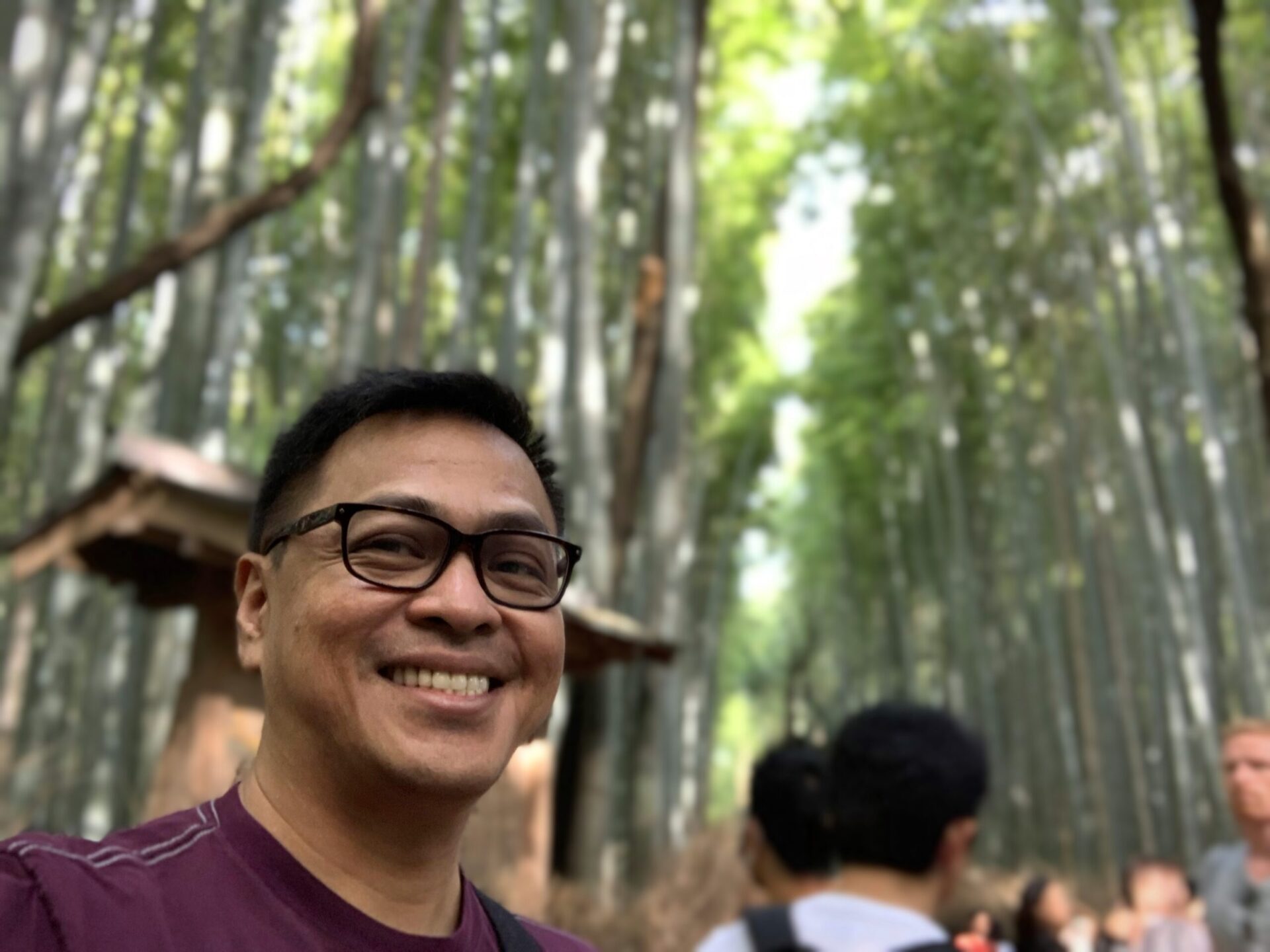
Frameworks are not there to sort people into boxes. They are tools for asking better questions and turning what you notice into something you can act on.
The Full Circle
Where Understanding Becomes Practice
Nobody asked Ned to leave.
That is the part people get wrong. The company was not pushing him out. There was no restructuring, no quiet conversation about winding down. He chose to go.
By then his parents and his family no longer needed him the way they once had. The obligations that had held him in place for decades had eased. So he took early retirement to chase a question that had been sitting in his head for years.
He did not know if there was an answer. He did not know if cultural intelligence would even give him a framework to build on. He was trading something stable for something that might not exist. That tension, between needing stability and needing change, was his to settle alone.
Ned works through ideas by putting them in front of people. Through speaking engagements and learning sessions, he brings together stories, research, frameworks, and lived experience to help people examine how culture shapes the ways they communicate, create, work, adapt, and connect. His engagements run from conference talks to workshops, masterclasses, and classrooms.
Understanding is only worth so much until someone uses it. That is why Ned’s work also includes masterclasses, workshops, training programs, and self-guided learning experiences, built to help people examine their assumptions and apply cultural insight where they actually live and work.
Ned’s work continues through the people who question it and put it to use. In classrooms, conferences, workshops, and book conversations, a network of creators, educators, and practitioners is forming around it.


Culture is not only a professional subject for Ned. Friends, family, travel, and ordinary days shape how he understands connection just as much as the work does.
Ned did not become the doctor his mother once hoped he would be.
Instead, his path led through stories, cultures, classrooms, and communities. What began as a search for his own direction became a lifelong effort to understand how people make meaning, navigate differences, and connect with one another.
The journey has taken him across countries and disciplines, from professional practice to scholarship, and from learning from others to creating spaces where others can learn.
Through it all, the questions have remained remarkably consistent: How do we understand people better? How do we remain rooted while learning to adapt? And how can ideas become useful in the lives of others?
Those questions now come together in the C3 Bamboo Framework, an evolving approach to understanding what happens when stories, people, and ideas cross cultures. Rooted in Culture, Communication, and Connection, it brings together the different strands of Ned’s work while creating space for their continued development across storytelling, professional practice, and cultural diplomacy.

Continue the Conversation
Explore how stories, people, and ideas cross cultures.
Ned’s work moves between frameworks, books, classrooms, speaking engagements, and learning programs, all connected by the same continuing questions about culture, communication, and connection.
C3 Bamboo Framework and CIS Bamboo Framework are original proprietary frameworks developed by Ned Legaspi.