

Author Educator Speaker

Exploring culture, communication, and connection through stories, people, and nations

From UP to Southeast Asian Narratives

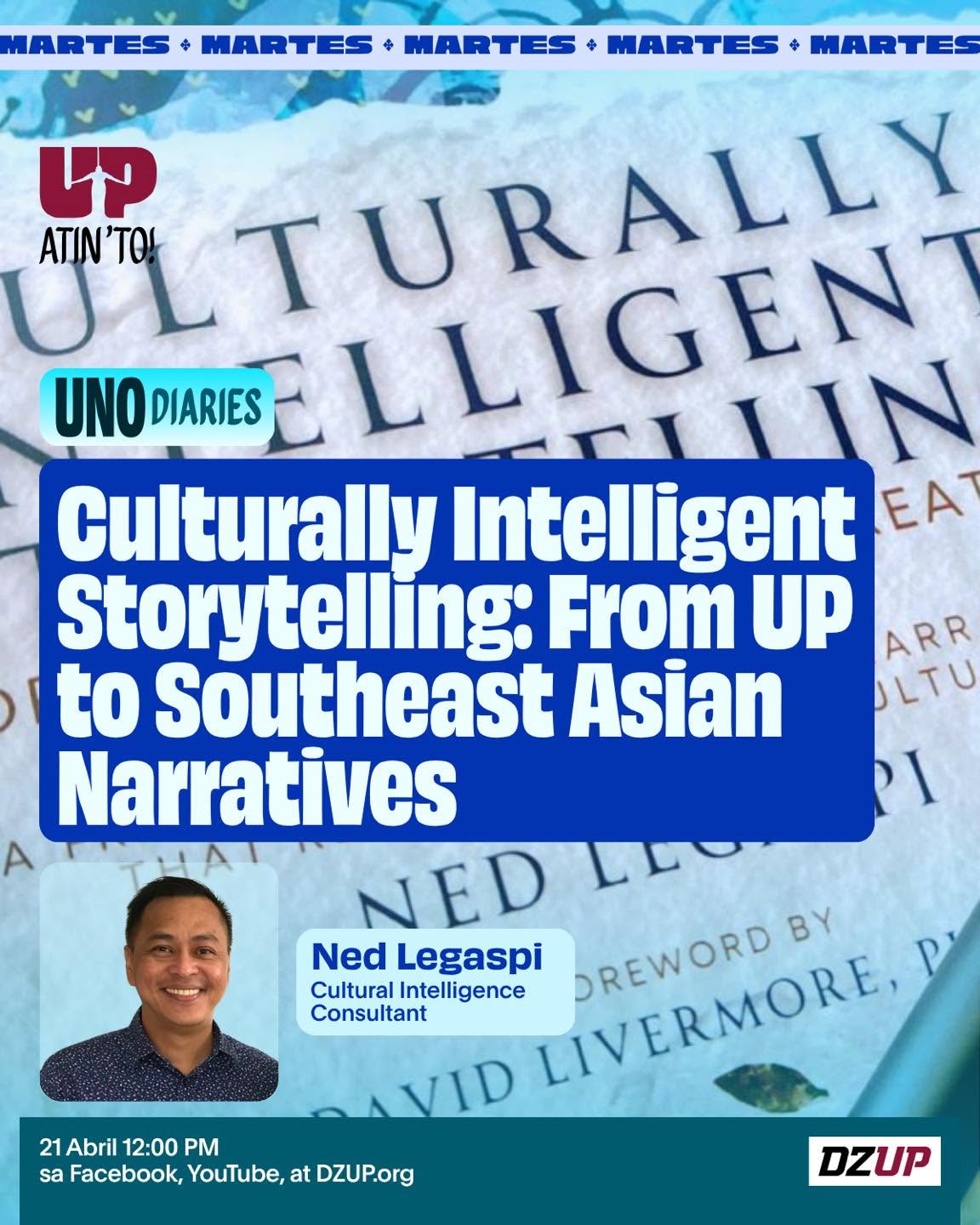
Promotional graphic for Ned Legaspi’s DZUP interview on culturally intelligent storytelling and Southeast Asian narratives.

Can Filipino stories resonate beyond the Philippines? That question framed my conversation on Uno Diaries, the public affairs program of DZUP 1602 AM, where we explored how culturally intelligent storytelling can help local narratives travel across cultures without losing what makes them distinctly Filipino.

Media & Conversations Video DZUP · UP Atin ’To!

The interview aired on April 21, 2026, through DZUP’s Facebook, YouTube, and radio platforms. The conversation introduced the book Culturally Intelligent Storytelling for Southeast Asian Creators to a public audience while opening a wider discussion about whether Filipino stories can cross borders and connect with people from other cultures.

Watch the Full Conversation

Originally aired on Uno Diaries over DZUP 1602 AM / UP Atin ’To! on April 21, 2026. Embedded from the official DZUP YouTube channel.

About the Conversation

The interview explored one of the questions that eventually shaped much of my work as an author and cultural intelligence educator:

Can Filipino stories cross borders without becoming less Filipino?

We discussed why stories do not succeed internationally simply because they are translated, distributed, or promoted to a global audience. A story may travel widely and still fail to connect. Resonance requires a deeper understanding of how culture shapes meaning, emotion, relationships, humor, conflict, and audience expectations.

The discussion also emphasized that Filipino stories do not need to imitate dominant global forms in order to matter. Their cultural specificity can become a source of creative strength, provided that storytellers understand both the world from which the story emerges and the audiences who may encounter it elsewhere.

Key Ideas from the Conversation

  • Filipino stories already possess value beyond the Philippines.
  • Authenticity is more powerful than cultural imitation.
  • Cultural intelligence helps stories travel responsibly.
  • Local identity can become a creative and strategic advantage.
  • Reach and resonance are not the same thing.
  • Storytelling ultimately creates human connection across cultures.
The goal is not to make Filipino stories more global. The goal is to help global audiences understand Filipino stories.

Why This Conversation Matters

This interview represents one of the early public conversations that introduced culturally intelligent storytelling beyond the classroom, professional workshops, and academic conference settings.

Rather than treating Southeast Asian storytelling as a niche or regional concern, the conversation positioned it as part of a larger global discussion about culture, communication, media, and the creative industries.

It also reinforced an idea that continues to shape my work today: stories travel because of their cultural roots, not despite them.

From UP to a Wider Southeast Asian Conversation

The setting carried its own significance. As a University of the Philippines alumnus, returning to a UP media platform to discuss a framework shaped by years of professional, academic, and regional experience connected the work back to one of its intellectual roots.

At the same time, the discussion extended beyond the Philippines. The book and the CIS Bamboo Framework were developed to help creators think about how stories move across Southeast Asian cultures and beyond, especially in contexts where shared regional experiences coexist with profound differences in language, religion, history, hierarchy, and communication.

Why It Belongs in the C3 Journal

The C3 Journal documents not only finished ideas but also the conversations through which those ideas entered public life.

This appearance captures an important stage in the development of culturally intelligent storytelling as a public framework. It shows how the conversation began reaching students, educators, creators, and wider audiences through broadcast media.

Share This Story

Continue Exploring

From Filipino Stories to Cross-Cultural Connection.