

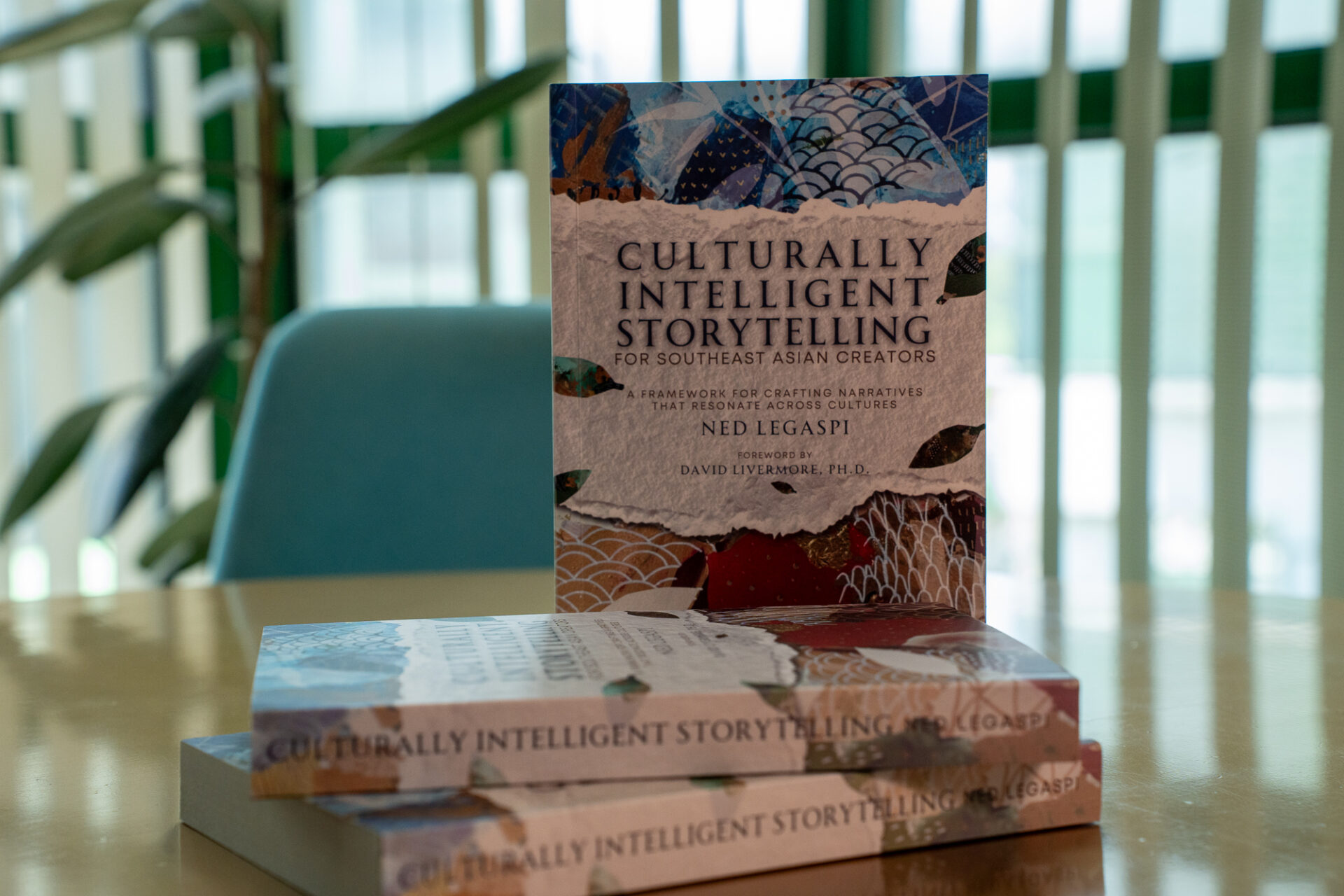
A week before the Philippine launch at Ateneo de Manila University, Village Connect introduced the event as a public conversation about how Filipino stories can remain culturally rooted while reaching wider audiences.
On July 16, 2026, Village Connect published a pre-event feature on the Philippine launch of Culturally Intelligent Storytelling for Southeast Asian Creators at The Loft in Areté, Ateneo de Manila University.
The launch was scheduled for July 23 and organized by the Ateneo de Manila University Rizal Library in collaboration with Areté. While attendance was by invitation, the program was also made available through a livestream for a wider audience.
Bringing the Book Home
The Santa Monica launch in November 2025 introduced the book internationally. The Ateneo event carried a different emotional and intellectual significance. It brought the work back to the Philippines, where many of the cultural questions behind the framework had first taken shape.
The book was written for Southeast Asian creators, but its arguments were grounded in years of thinking about Filipino stories, audiences, and cultural meaning. The Philippine launch created a space to discuss those ideas with media practitioners, educators, social scientists, and creative professionals.
Bringing the book home meant placing its ideas back in conversation with the cultural world from which they had grown.
More Than a Traditional Book Launch
The Village Connect feature described the event not simply as the presentation of a publication, but as a forum on the evolving role of culture in storytelling.
That framing reflected the intention behind the program. The central question was not only what the book contained, but what kind of storyteller a creator chooses to become when working across cultures.
The event brought together voices from Philippine media, entertainment, education, and the social sciences to explore how stories can remain authentic to their cultural roots while connecting with audiences from different backgrounds.
The People in the Conversation
The program was hosted by Jervi Wrightson, popularly known as KaladKaren, and Galvin Radley Ngo of the Ateneo Institute for the Science and Art of Learning and Teaching.
The announced speakers and discussants represented different parts of the storytelling ecosystem, including media executives, filmmakers, television writers, producers, educators, and social scientists.
- Mark Nepomuceno of ABS-CBN
- John Kenneth “Ken” De Leon of GMA Network
- Filmmaker Ruel S. Bayani
- Producer and talent manager Noel Ferrer
- Dr. Christine Cox of the Ateneo Department of Communication
- Dr. Maria Regina Hechanova-Alampay of the School of Social Sciences
The CIS Bamboo Framework at the Center
The article also introduced the CIS Bamboo Framework as the book’s central contribution.
Through StoryRoot, StoryCraft, StoryPulse, and StoryLeaf, the framework guides creators through four connected tasks: understanding cultural grounding, shaping the narrative, anticipating audience response, and considering the wider life of the story.
The framework is designed for writers, filmmakers, content creators, educators, and communicators who want their work to travel across cultures without losing the identity that gives it meaning.
From CIS to the Wider C3 Bamboo Framework
Village Connect also noted that the CIS Bamboo Framework is the first comprehensive application of the broader C3 Bamboo Framework, which focuses on Culture, Communication, and Connection.
In that wider model, stories are one lens. People and nations are the others. Together, they offer a way to examine how individuals, institutions, and communities navigate cultural boundaries while preserving identity and building understanding.
Why This Pre-Event Feature Matters
This article documented the intention behind the Philippine launch before the event itself took place.
It established the launch as a cultural and intellectual conversation, not only a promotional milestone. It also positioned the book within a larger body of work connecting storytelling, cultural intelligence, education, media practice, and Southeast Asian experience.
Looking back, the article now serves as a record of what the Ateneo launch hoped to open: a wider conversation about the kind of stories Filipinos and Southeast Asians create, the audiences they hope to reach, and the cultural identities they choose to carry with them.
Share This Story
Continue Exploring