

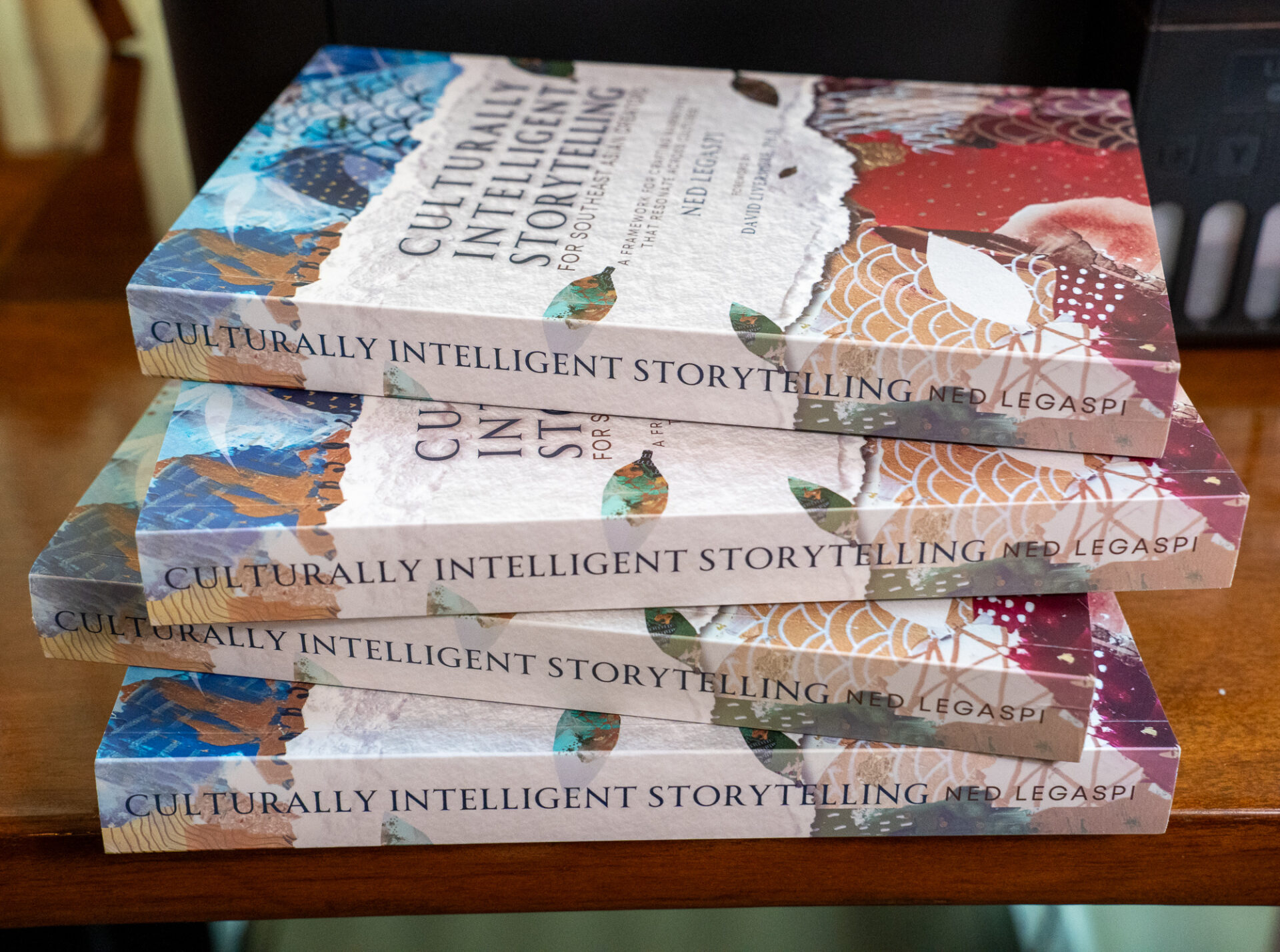
Coverage by The Manila Times placed the Philippine launch of Culturally Intelligent Storytelling within a national media platform, marking an important step in bringing the book’s ideas to a wider public.
On July 19, 2026, The Manila Times published “Ateneo Rizal Library hosts PH launch of Ned Legaspi’s Culturally Intelligent Storytelling.”
The article appeared four days before the July 23 Philippine launch at The Loft in Areté, Ateneo de Manila University. Its publication placed the event within one of the Philippines’ longest-running national newspapers and expanded the book’s visibility beyond the communities already connected to the launch.
A National Platform for the Philippine Launch
The international launch in Santa Monica introduced the book to a global community of cultural intelligence practitioners. The Philippine launch brought the conversation home. Coverage by The Manila Times gave that return a broader national frame.
This mattered because the book was not only being presented as a new publication. It was entering a wider discussion about Filipino and Southeast Asian stories, the cultural assumptions embedded in them, and the choices creators make when addressing audiences across borders.
National coverage helped move the launch from a single event into a wider public conversation about culture, storytelling, and connection.
The Ateneo Rizal Library as Institutional Host
The Philippine launch was hosted by the Ateneo de Manila University Rizal Library in collaboration with Areté.
That institutional setting was significant. A library is not only a place where books are stored. It is a space where ideas are preserved, examined, shared, and placed in conversation with other bodies of knowledge.
Holding the launch at Ateneo also connected the book with education, communication, the social sciences, and the formation of future storytellers and cultural workers.
A Book About More Than Storytelling Technique
Culturally Intelligent Storytelling for Southeast Asian Creators is not a conventional writing manual. Its central concern is the cultural life of a story.
It asks how creators can understand the roots of their narratives, shape them with intention, anticipate how different audiences may respond, and allow the work to travel without stripping away the identity that gives it meaning.
Those questions are organized through the CIS Bamboo Framework: StoryRoot, StoryCraft, StoryPulse, and StoryLeaf.
- StoryRoot examines cultural grounding and identity.
- StoryCraft focuses on narrative choices and construction.
- StoryPulse considers audience interpretation and resonance.
- StoryLeaf looks at how stories circulate, adapt, and create impact.
Why The Manila Times Coverage Matters
Media coverage has different kinds of value. Some stories document a milestone. Others introduce the ideas behind the work. Coverage from a national publication does both while also extending credibility and discoverability.
For a knowledge enterprise, this is especially important. The long-term goal is not merely to announce that a book exists, but to create pathways through which readers, universities, organizations, and communities can encounter and apply its ideas.
The Manila Times article became one of those pathways.
From Media Visibility to Continuing Work
The Philippine launch was designed as more than a ceremonial event. It brought together practitioners and educators to discuss what it means to tell stories responsibly and intelligently across cultures.
Since the book’s international debut, its journey has continued through:
- reader reflections and photographs;
- academic and professional conversations;
- institutional visits and library presentations;
- talks, workshops, and masterclasses; and
- the growing C3 Bamboo Network.
Seen within that continuing journey, The Manila Times feature represents a major point of public recognition. It documented the moment when the Philippine launch entered the national media record and invited a wider audience into the conversation.
Share This Story
Continue Exploring