

Share This Story
A modest Thai family story crossed borders not by becoming culturally neutral, but by allowing care, regret, mortality, and unspoken love to remain deeply rooted in ordinary life.
Some stories travel through scale. Others travel because they understand the emotional weight of a fruit tray, a hospital bed, a motorcycle ride, or simply showing up.
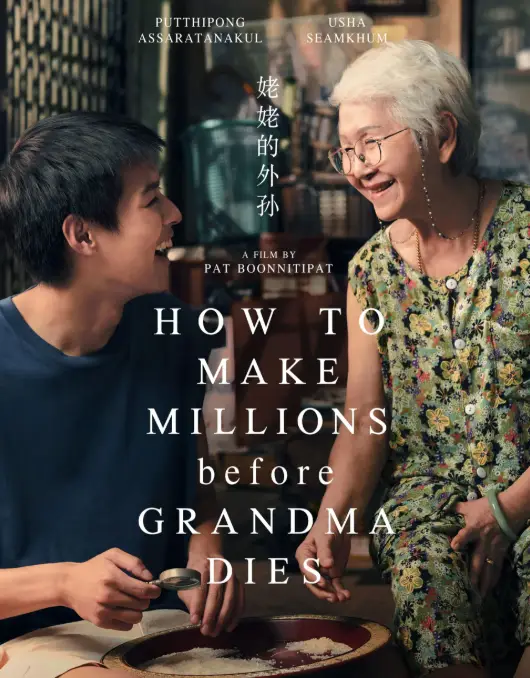
How to Make Millions Before Grandma Dies is quiet in almost every way. Its setting is domestic. Its gestures are small. Its humor and pain grow from family relationships rather than spectacle.
Yet the film reached audiences across Southeast Asia and beyond. StoryRoot helps us ask why.
The StoryRoot Question
What cultural soil gives this story its emotional strength before any question of global reach is asked?
Before resonance, there are roots
StoryRoot is the first stage of the CIS Bamboo Framework. It begins beneath the visible story and asks what values, relationships, expectations, histories, and ways of living are already shaping the characters.
This matters because global storytelling is often approached too late in the process. Creators are asked how to make a story understandable, marketable, or accessible across borders before they have fully understood what makes the story culturally alive.
StoryRoot does not begin by asking how far a story can travel. It begins by asking where the story stands.
The first discipline of cultural intelligence
What appears on the surface
The film’s surface signals are unassuming. Thai is spoken in everyday family settings. The home feels lived in rather than designed for cinematic grandeur. Clothing, food, transportation, illness, and care remain grounded in recognizable routines.
Everyday Thai
The story remains close to the speech rhythms, humor, hesitation, and emotional distance of ordinary family life.
A modest family home
The domestic space holds memory, obligation, conflict, and the routines through which care becomes visible.
Emotional restraint
Music supports rather than dictates emotion, allowing silence and ordinary sound to carry much of the feeling.
Feeling through behavior
Affection, discomfort, resentment, and grief are often communicated through presence, routine, gesture, and what remains unsaid.
These cues make the film visibly Thai. But the deeper work happens beneath them.
The cultural roots beneath the family story
The film is organized around relationships rather than isolated individual desire. Family membership carries obligation. Age and hierarchy shape who can speak, who must wait, and whose needs are expected to matter.
Care is rarely presented as pure feeling. It is work. It takes time, attention, transportation, food, money, patience, and physical presence.
Care is an obligation and a choice
Family responsibility shapes behavior even when motives are mixed, inconvenient, or morally uncertain.
Age carries relational weight
Respect for elders is not only spoken. It influences decisions, emotional restraint, and what family members are willing to confront.
Love is not always verbal
Shame, dignity, pride, and concern for relationships shape what can be said directly and what must be shown through action.
Impermanence enters ordinary life
Illness and death are not treated only as dramatic events. They change the meaning of time, presence, memory, and unfinished relationships.
Money and affection become entangled
Material need, inheritance, care, resentment, and love coexist, making motives difficult to separate cleanly.
Identity is relational
Characters understand themselves through their place in the family, even when that place produces disappointment or distance.
How ordinary objects carry culture
One of the film’s strengths is its trust in ordinary details. Objects do not function merely as decoration. They become evidence of care, neglect, memory, dependence, and changing relationships.
Each detail gains meaning through repetition and relationship. The audience learns to recognize love not because a character announces it, but because a routine changes, a person returns, or an act of care is performed without ceremony.
The film’s power lies not in what it explains about family, but in what it allows us to observe.
Culture carried through behavior
Reading cultural dimensions without reducing the film
Cultural dimensions can help creators notice patterns in the story, but they must remain interpretive tools rather than fixed descriptions of Thailand or Thai families.
A collectivist orientation can help explain why family obligation carries so much narrative force. Relational hierarchy can illuminate the weight of age and respect. Indirect communication can help us notice how silence, gesture, and behavior carry meaning.
But the film’s artistry cannot be reduced to a cultural chart. Genre, performance, class, family history, illness, personality, and the specific choices of the filmmakers all matter.
Why audiences across borders understood it
Viewers do not need to share the same family structure or cultural expectations to recognize the film’s emotional problem.
Many people understand what it means to realize that time with someone is limited. They understand regret, mixed motives, family disappointment, unspoken love, and the hope that care can repair something before it is too late.
The expression is culturally specific, but the emotional access is wide. Audiences enter through mortality, family, guilt, tenderness, and the painful gap between what people feel and what they manage to say.
The story does not become universal by leaving Thailand behind. It becomes resonant by going deeper into the family it already knows.
Rootedness as the path to connection
Five StoryRoot lessons for creators
- Begin with the relationship, not the market. Understand what family, duty, care, shame, love, and loss mean inside the story before deciding how to make them travel.
- Let ordinary details carry meaning. Food, objects, routines, and physical presence can reveal cultural logic more powerfully than explanatory dialogue.
- Trust restrained emotion. A story does not have to announce every feeling. Silence and gesture can create participation when the audience is given enough context to read them.
- Allow motives to remain mixed. Family relationships often contain duty, self-interest, resentment, affection, and guilt at the same time. Complexity makes the emotional world more credible.
- Find resonance through cultural honesty. Specificity is not the enemy of accessibility. A rooted story gives audiences a real world to enter rather than a generic emotion to consume.
Share This Story
The StoryRoot Core
Care begins with obligation, becomes presence, and slowly reveals itself as love.
The film’s cultural specificity gives this movement its shape. Its emotional truth allows audiences elsewhere to recognize it.
What this case study reveals
How to Make Millions Before Grandma Dies did not need to become louder, faster, or less Thai to reach audiences outside Thailand.
Its strength came from paying attention to the cultural soil of the story: family obligation, hierarchy, restrained affection, economic tension, mortality, and care expressed through ordinary acts.
That is the central StoryRoot lesson. Global resonance is not always created by adding more. Sometimes it begins by listening more carefully to what is already present beneath the story.
Source note: This case study is adapted from Chapter 37 of Culturally Intelligent Storytelling for Southeast Asian Creators. It is a spoiler-light interpretive analysis of the film.
Editorial disclosure: This article was adapted from Ned Legaspi’s published work and revised for the C3 Journal with AI-assisted editing. The framework, analysis, interpretations, and final approval are the author’s.