

Climate science tells us what is changing. Stories help people understand what those changes mean for the lives, relationships, places, and futures they are trying to protect.
Climate change is global, but it is never experienced from a single point of view.
A coastal community, an urban household, a farming family, and a young person growing up in a rapidly changing city may all encounter climate risk through different experiences, relationships, responsibilities, and cultural frames.
This creates a difficult task for communicators. Scientific accuracy is essential. But accurate information does not automatically become meaningful information.
How do we tell climate stories that people can recognize themselves in without simplifying either the science or the culture?
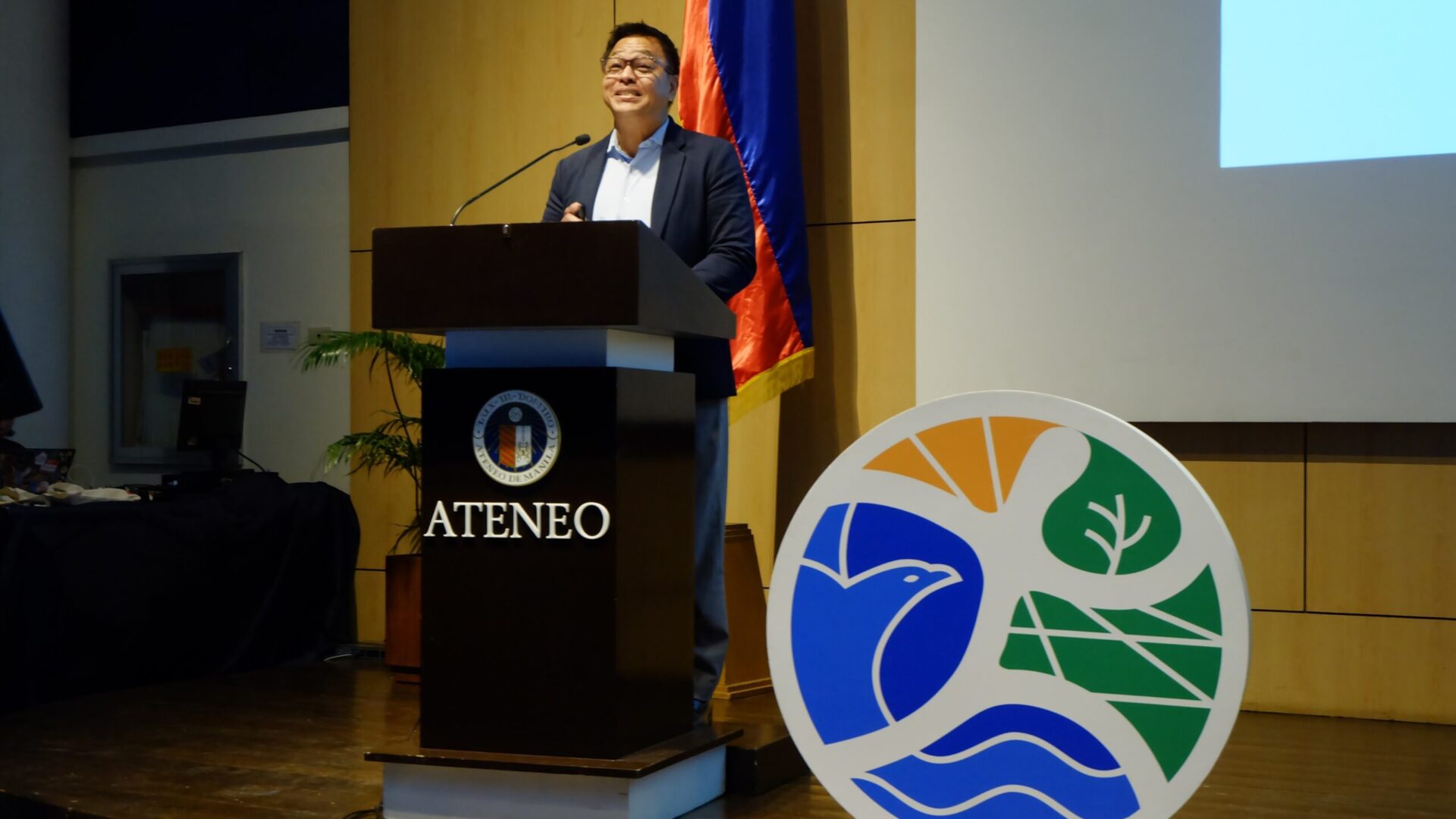
I explored this question at the 2025 AUN-EEC Conference on Ecological Education and Culture at Ateneo de Manila University. My presentation, Culturally Intelligent Storytelling in Climate Communication: A Southeast Asian Lens on Resonance, Care, and Representation, examined how cultural intelligence can deepen the way climate issues are narrated.
Science does not speak by itself
Climate communication sometimes treats the problem as a deficit of information: people need more facts, clearer explanations, or stronger evidence.
These remain necessary. The science must not be distorted for drama, reduced to false certainty, or replaced by emotional storytelling.
But facts always enter existing worlds of meaning. People interpret scientific information through their experience of authority, family, livelihood, community, place, risk, fairness, and responsibility.
Climate communication fails when it treats the audience as an empty space waiting to be filled with facts.
From information transfer to human encounter
A message may be scientifically correct and still feel distant. It may explain what is happening without helping people see who is expected to act, what relationships are at stake, or how the problem connects with the life they already know.
Culture shapes the meaning of climate action
Cultural intelligence does not change the science. It changes the questions communicators ask before deciding how to frame the science.
Who is expected to act?
A story centered on individual behavior may resonate differently where decisions are understood through family, community, or institutional relationships.
Whose knowledge is trusted?
Audiences may weigh scientists, public officials, elders, religious leaders, community members, and lived experience in different ways.
What are people being asked to protect?
Climate action may be framed around personal safety, family continuity, community survival, livelihood, sacred places, or responsibility to future generations.
How is the future imagined?
A distant global target may feel abstract unless it connects with seasonal cycles, inherited land, children’s futures, or changes people can already observe.
Who carries the burden?
Messages about sacrifice and adaptation are interpreted through questions of inequality, historical responsibility, capacity, and who benefits from existing systems.
What does the environment mean?
Land and water may be understood not only as resources, but as home, memory, identity, livelihood, ancestry, and relationship.
These are not fixed answers for particular nationalities or communities. Culture provides context, not a complete explanation of an individual. Culturally intelligent communication begins with inquiry rather than assumption.
From audience to relationship
One of the central ideas in my presentation was the need to move beyond imagining the audience as a passive receiver of information.
An audience is already interpreting. People compare the message with what they have experienced, whom they trust, what they fear losing, and what they believe they owe to others.
- Who appears as the main actor in the story?
- Whose experience is treated as credible evidence?
- Is responsibility framed as personal, collective, institutional, or shared?
- What relationship with nature, place, and community does the story assume?
- What future does the story invite the audience to imagine?
These are storytelling questions, but they are also cultural questions. They shape whether an audience feels blamed, excluded, represented, respected, or invited into a relationship with the issue.
People do not respond only to the problem described. They also respond to the role the story gives them.
Audience, agency, and belonging
Five principles for culturally intelligent climate stories
- Protect the integrity of the science. Storytelling should make evidence understandable and relevant without inventing certainty, exaggerating claims, or turning complexity into spectacle.
- Begin with lived context. Ask how the issue is already experienced through livelihood, family, place, identity, memory, and existing forms of knowledge.
- Make responsibility visible. Clarify what individuals, communities, institutions, industries, and governments can realistically do rather than shifting the entire burden onto one actor.
- Create emotional access without exploiting suffering. People need reasons to care, but vulnerable communities should not be reduced to images of tragedy or used merely to intensify a message.
- Leave room for agency. Stories of danger should also show knowledge, adaptation, cooperation, and the capacity of people to shape what happens next.
Three traps to avoid
Facts without context
Information may be accurate but emotionally and culturally distant from the people expected to respond.
One universal audience
The same frame will not automatically carry the same meaning across communities, generations, and social positions.
Vulnerability without dignity
Communities can be portrayed only as victims, while their knowledge, relationships, and capacity for action disappear from the story.
Expanding the framework
Presenting at the AUN-EEC Conference allowed me to bring the CIS Bamboo Framework into a conversation beyond its original context of film, television, and streaming media.
That expansion mattered. The framework began with a question about how stories travel across cultures. But the same question becomes urgent wherever stories are used to make complex realities understandable and meaningful.
Climate communication is one such space because the issue crosses every border while its effects, responsibilities, and meanings remain unevenly experienced.
The Central Insight
The challenge is not merely to tell more stories about climate change.
It is to understand the people, relationships, and cultural worlds those stories are trying to reach.
About the conference
The 2025 AUN-EEC Conference on Ecological Education and Culture brought together educators, researchers, practitioners, and students to examine current responses and actions in climate change education.
Held at Ateneo de Manila University, the conference explored how education, communication, culture, and interdisciplinary collaboration can contribute to more meaningful responses to the climate crisis.
Editorial disclosure: This article was developed from Ned Legaspi’s conference presentation and professional experience, then revised for publication with AI-assisted editing. The ideas, interpretations, experiences, and final approval are the author’s.