

Author Educator Speaker

Exploring culture, communication, and connection through stories, people, and nations

From Research to Framework: Presenting Culturally Intelligent Storytelling in Vietnam

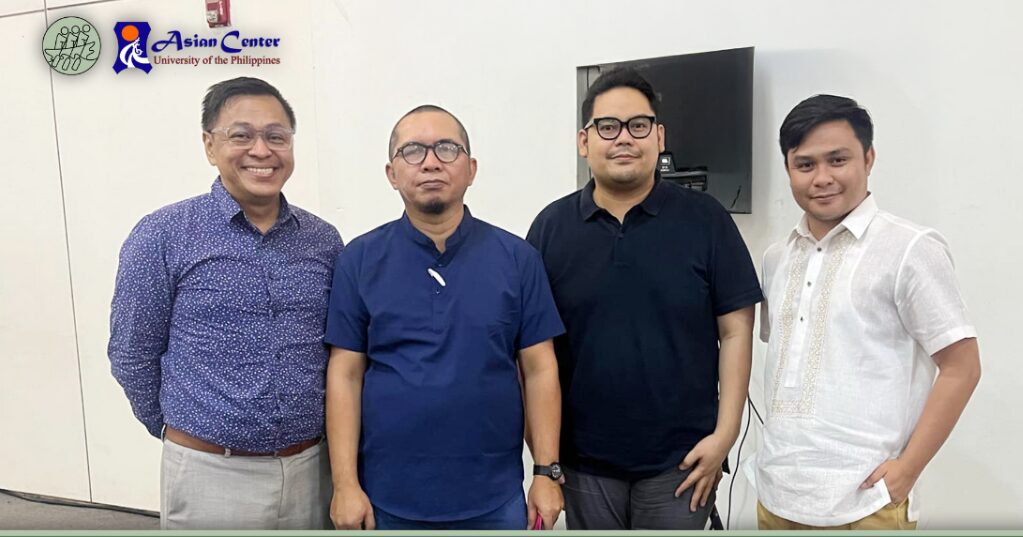
Ned Legaspi with fellow Tri-College PhD Philippine Studies students Ian Jay B. Formacion, Christopher Wright, and another student at the University of the Philippines Asian Center.

The UP Asian Center featured my research on culturally intelligent storytelling ahead of its presentation at an international conference in Hanoi, marking an early academic milestone in the development of the CIS Bamboo Framework.

Media & Conversations Written / Text Research Journey

In July 2025, the University of the Philippines Asian Center published “Making Waves,” an institutional feature on three students from the Tri-College PhD Philippine Studies Program whose work had received recognition in research, storytelling, and playwriting.

I was included in the article after receiving a travel grant from the UP Office of International Linkages to present my paper, Culturally Intelligent Storytelling: A Southeast Asian Lens on Narrative, Identity, and Engagement, at the 2025 international conference of the Asian Consumer and Family Economics Association in Hanoi, Vietnam.

What the UP Asian Center Highlighted

The feature identified the paper as an introduction to the CIS Bamboo Framework, a model designed to help Southeast Asian creators develop culturally grounded stories that can resonate with audiences beyond their home cultures.

It also situated the work within the different strands of my own professional and academic journey: three decades in global media, continuing doctoral work in Philippine Studies, a cognate in Anthropology, and graduate electives in Education.

  • The paper centered Southeast Asian cultural experience rather than treating Western narrative conventions as universally neutral.
  • The CIS Bamboo Framework translated academic concepts into a practical guide for writers, media practitioners, educators, and other creators.
  • The Hanoi presentation placed the developing framework within an international scholarly conversation.
The recognition mattered because it documented the point when ideas shaped by professional practice and academic research began taking the form of a teachable framework.

From Professional Experience to Academic Inquiry

The framework did not begin as an abstract exercise. It grew from years of working with stories intended to move across countries, languages, markets, and cultural expectations.

Academic work gave me a different way to examine those experiences. Philippine Studies helped me ask where stories are located. Anthropology sharpened my attention to cultural meaning and interpretation. Education pushed me to consider how these ideas could be explained, taught, and applied.

The result was a framework that used the bamboo not merely as a visual metaphor, but as an organizing model for culturally intelligent storytelling: grounded in cultural roots, strengthened through craft, responsive to audiences, and able to travel without abandoning its origin.

Why the Hanoi Presentation Mattered

Presenting the paper in Vietnam placed the work in a Southeast Asian setting and before an international audience. That context mattered. The framework was created to challenge the assumption that creators from the region must erase, dilute, or overtranslate their cultural particularity in order to become globally understandable.

Instead, the paper argued for a more culturally intelligent approach: understand the cultural roots of the story, recognize the expectations of the audience, and build the bridges necessary for meaning to travel.

From Paper to Published Framework

The academic presentation became part of the longer development of Culturally Intelligent Storytelling for Southeast Asian Creators. What began as a research question was refined through conference presentations, teaching, conversations with practitioners, and continued writing.

Looking back, the UP Asian Center feature now serves as an early public record of that transition: from professional insight, to academic paper, to a framework that could be shared with a wider community.

Continue Exploring

Follow the Ideas Beyond This Feature.