

Share This Story
Filed retrospectively — the event took place October 10, 2025.
Stories do not have to choose between cultural specificity and global connection. Their roots may be the very reason they resonate.
At the Speech Communication Conference 2025, I began with a question that has shaped much of my work in global media.
How can a story remain deeply rooted in its culture and still resonate with people who do not share that culture?
For many years, a common assumption in global media was that stories became more universal by becoming less culturally specific. Local references were explained, unfamiliar practices were simplified, and cultural differences were sometimes softened in the hope of making stories more accessible to international audiences.
Yet many stories that now cross borders suggest another possibility. They do not travel because they have abandoned their cultural roots. Under the right conditions, they travel because those roots give them texture, credibility, and emotional truth.
Perhaps stories do not travel because they abandon their cultural roots. Perhaps they travel because they are rooted.
The central proposition
Cultural rootedness is not decoration
My paper, Rooted Yet Resonant: A Southeast Asian Framework for Culturally Intelligent Storytelling in Global Media, explored this tension through a Southeast Asian perspective.
Cultural rootedness is not simply the presence of local food, language, clothing, music, festivals, or landscapes. These visible elements can matter, but culture also operates beneath the surface of a story.
It can shape why characters make certain choices, how families negotiate conflict, how authority is understood, what remains unspoken, and what a community considers acceptable, shameful, responsible, or fair.
A story may look local because of its setting. It becomes culturally rooted when culture shapes its deeper narrative logic.
Where the story stands
The histories, values, relationships, identities, expectations, and social realities from which a story emerges.
Where connection becomes possible
The emotions, relationships, drives, and dilemmas through which another audience may enter the story without erasing its difference.
Resonance is not sameness
Cultural specificity alone does not guarantee that a story will connect beyond its place of origin. This is where resonance becomes important.
Stories may create points of connection through recognizable human drives, emotions, relationships, and dilemmas while still allowing those experiences to be expressed in culturally distinct ways.
Audiences do not need to share every cultural reference to recognize grief, longing, loyalty, ambition, fear, sacrifice, or the desire to belong. But those experiences do not have to look or sound the same in every culture.
Resonance, therefore, is not the removal of difference. It is the creation of enough emotional and interpretive access for connection to become possible.
A story can be culturally specific without becoming culturally inaccessible.
Rooted enough to be authentic, resonant enough to travel
Questions for creators
Culturally intelligent storytelling asks creators to examine both the roots of a story and the possible pathways through which audiences may connect with it.
- What cultural forces shape the characters and their choices?
- Which meanings are carried through relationships, hierarchy, silence, time, rules, or emotional expression?
- What might another audience recognize even when the cultural expression is unfamiliar?
- What needs context, and what should remain unexplained because discovery is part of the encounter?
These questions do not produce a formula for global success. Culture should never be reduced to a checklist, and audiences should never be treated as predictable cultural types.
The purpose is greater intentionality: knowing what gives the story its identity, anticipating where meaning may shift, and creating access without flattening cultural difference.
Stories as encounters
The conference theme, On Speaking Terms: Enabling Encounters, Engaging Communities, made the setting especially meaningful. It invited us to consider communication not simply as the transmission of information, but as an encounter.
Stories, too, are encounters. When a story travels, one cultural world meets another. The challenge for creators is not to eliminate the distance between them. It is to create enough understanding, curiosity, and emotional access for connection to become possible.
That is one of the central possibilities of culturally intelligent storytelling: not creating stories that are culturally neutral, but developing stories that are rooted enough to be authentic and resonant enough to travel.
About the conference
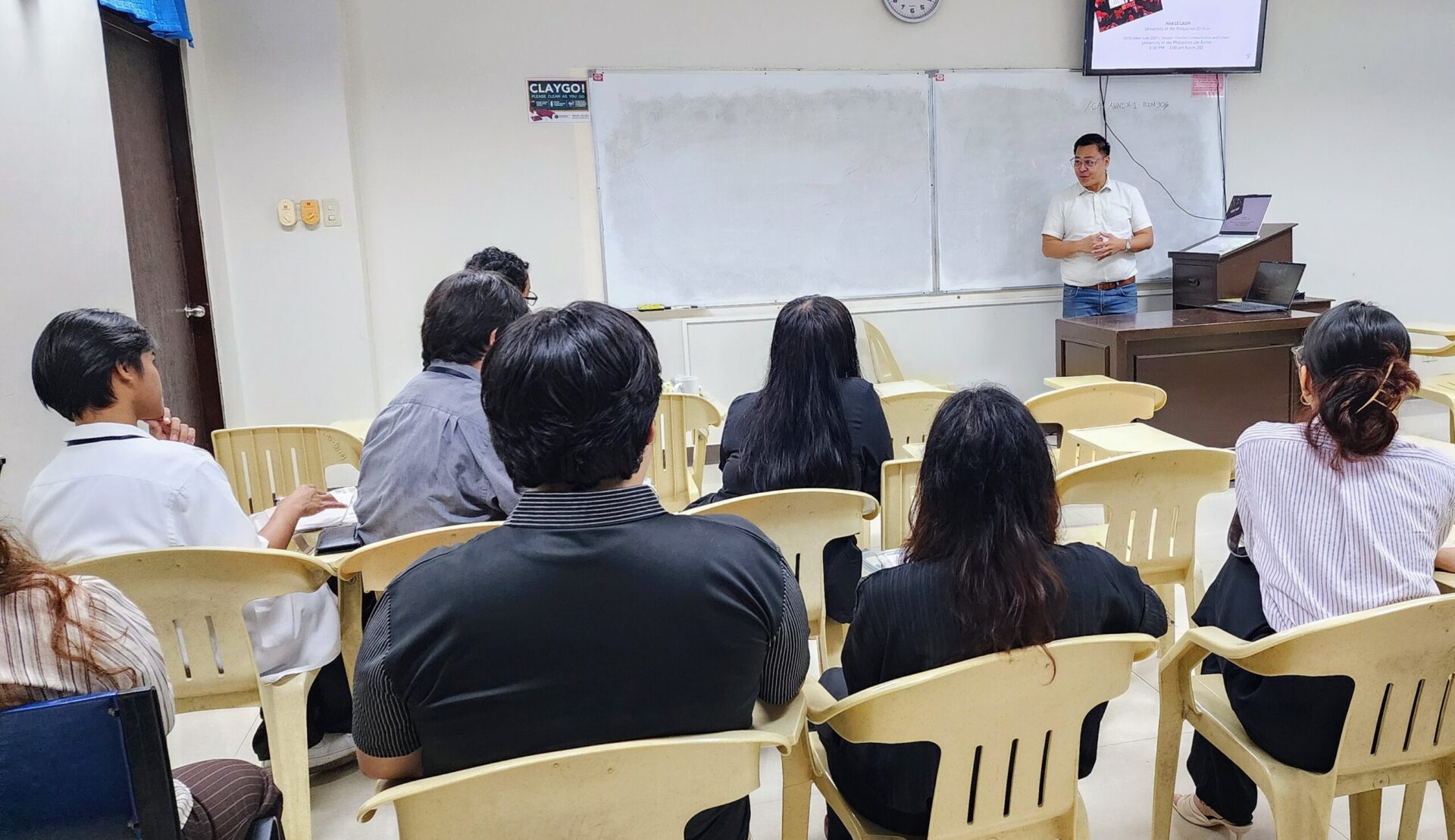
I presented the paper on October 10, 2025, at the Speech Communication Conference 2025 at the University of the Philippines Los Baños. The event brought together scholars and practitioners to examine communication as a means of enabling encounters and engaging communities.
The presentation formed part of the session on Creative Communication and Culture. Each presenter was allotted 12 minutes, followed by a moderated open forum after all papers in the session had been delivered.
Editorial disclosure: This article was developed from Ned Legaspi’s conference presentation and professional experience, then revised for publication with AI-assisted editing. The ideas, interpretations, experiences, and final approval are the author’s.
Share This Story