

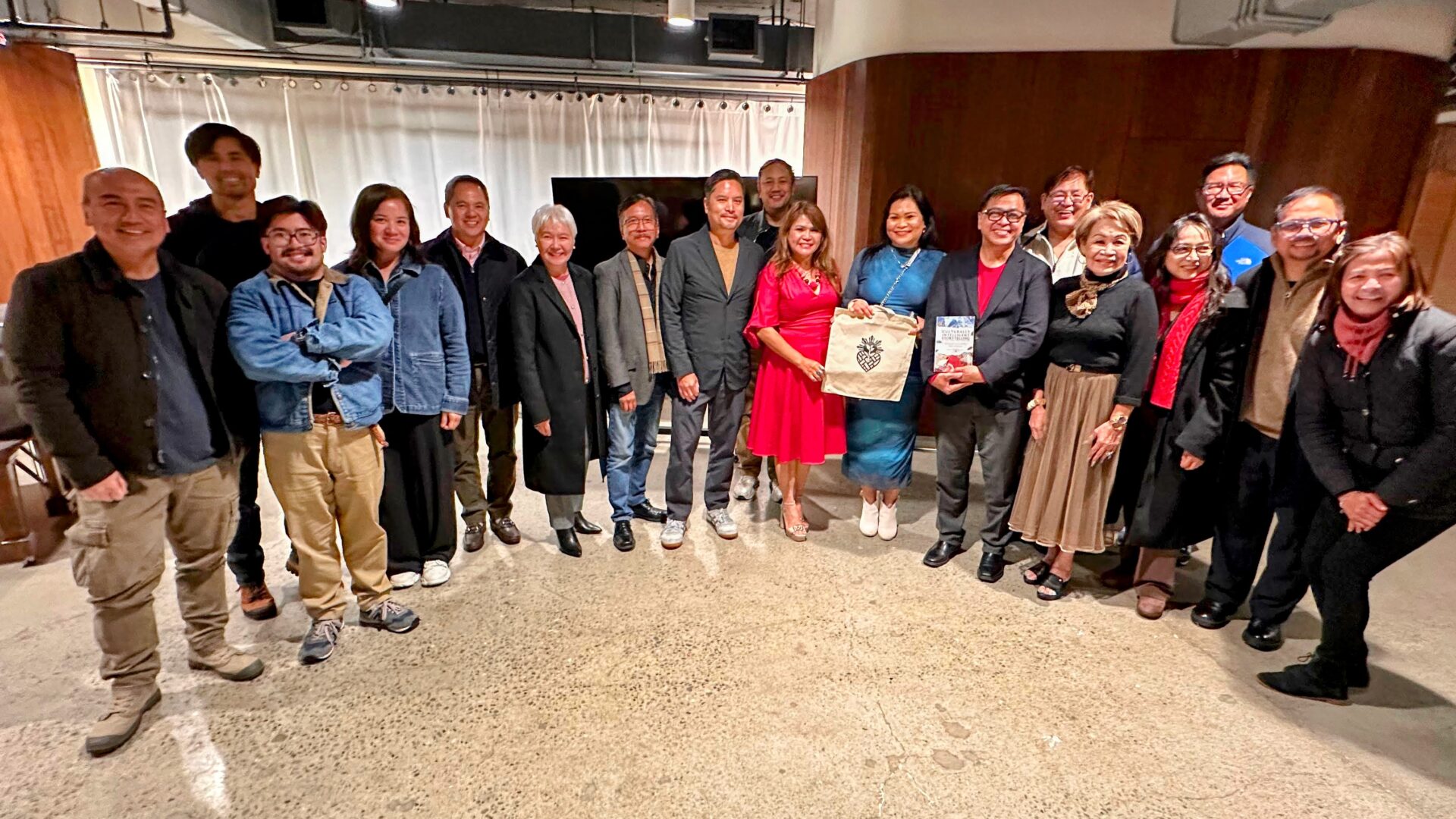
Some book launches introduce a work to an audience. Others allow the work to enter a community. In San Francisco, Culturally Intelligent Storytelling for Southeast Asian Creators became part of a Filipino American conversation about identity, creativity, and the stories we carry with us.
On December 6, 2025, Filipino American creatives and community members gathered at Sentro Filipino, the San Francisco Filipino Cultural Center, for NedTalks@SentroFilipino: The Fil-Am Creative Conversation. The book launch and talk was presented by ABS-CBN Foundation International — the nonprofit arm of the Philippines’ largest broadcast network — in collaboration with Kapwa Kollective.
The title of the gathering mattered. This was not meant to be a one-way lecture. It was a conversation about how storytelling and creative work can help Filipino communities understand themselves, make room for different experiences, and connect across generations and borders.
A conversation shaped by the diaspora
The Filipino American experience is not a single story. It includes people who migrated as adults, people who grew up between cultures, and younger generations discovering the Philippines through family memories, food, language, media, and community life. Each carries a different relationship with being Filipino.
That made San Francisco a meaningful place to talk about cultural intelligence. The challenge was not simply how to tell Filipino stories to the world. It was also how to recognize the differences within the community itself, and how to create without reducing Filipino identity to a familiar symbol or a single version of home.
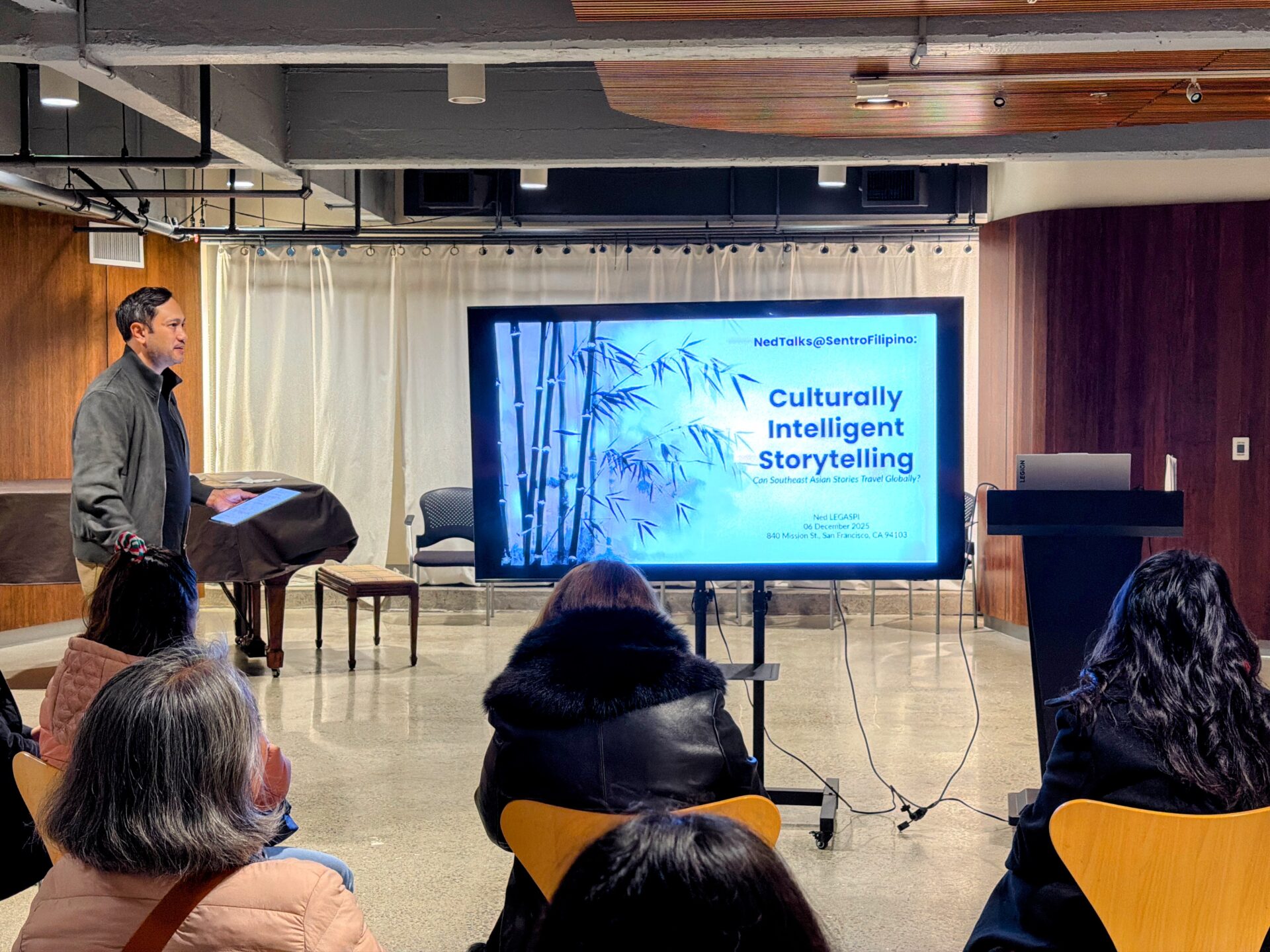
TJ Manotoc hosted the session with the warmth and ease of someone who understood both the creative field and the community in the room. His questions helped move the discussion from the ideas in the book to the experiences of the people listening.
We talked about the responsibility of creators to know where their stories are rooted, the choices involved in shaping those stories for different audiences, and the need to listen before assuming that cultural familiarity means cultural understanding.
A story can cross borders without leaving its roots behind.
From cultural identity to creative practice
The CIS Bamboo Framework gave us a practical way to explore those questions. StoryRoot asks creators to understand the cultural values and experiences beneath a story. StoryCraft considers how those roots are shaped into creative choices. StoryPulse asks us to read the audience and the moment. StoryLeaf looks at what happens when a story travels, grows, and takes on meaning in other places.
In a diaspora setting, these stages become especially visible. A story may begin in the Philippines, be remembered differently by someone who left, and be received differently again by a child born in the United States. None of those responses is automatically less Filipino. Cultural intelligence helps us stay curious about the differences instead of rushing to decide which version is the correct one.
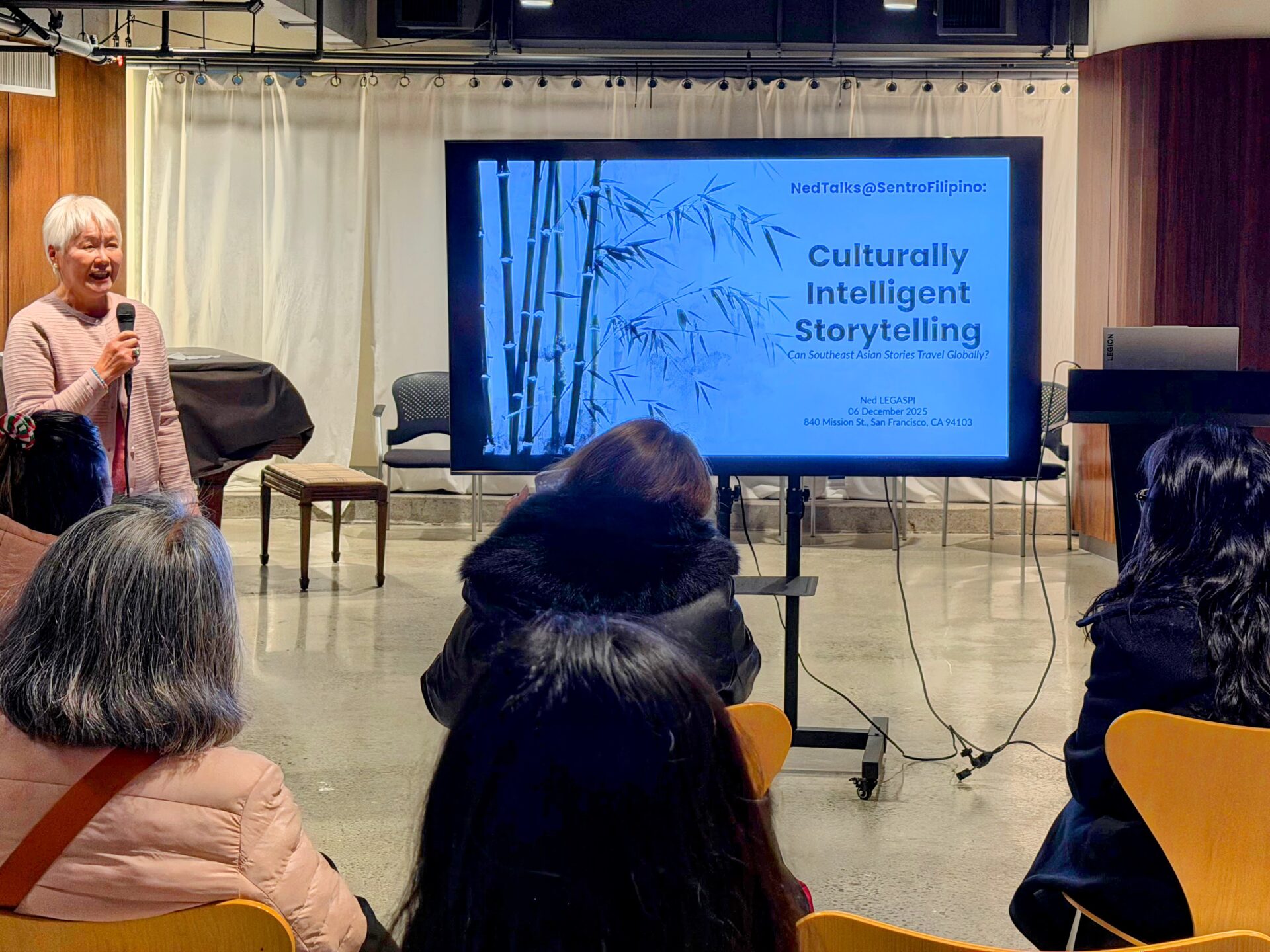
Lisa Cabahug’s presence also reflected the gathering’s connection to ABS-CBN Foundation International and its work with Filipino communities beyond the Philippines. Together with Kapwa Kollective, the organization helped create a space where a conversation about storytelling could also become an expression of community care.
This was why the setting felt right. Sentro Filipino exists as a cultural home in San Francisco, a place for art, language, history, and community. Inside that space, the book was not only being presented as something to read. It was being tested against lived experience.
Kapwa as the purpose of the gathering
The Filipino concept of kapwa is often translated as shared identity, but its meaning is deeper than simple togetherness. It asks us to recognize the other person as part of a larger “us.” For creators, that recognition changes the work. We do not merely speak about a community. We become accountable to the people whose lives, memories, and identities enter our stories.
That spirit also shaped the purpose beyond the book. Admission was free, and guests were invited to support ABS-CBN Foundation International’s Sagip Kapamilya disaster-relief work for families displaced by recent earthquakes and other calamities in the Philippines. Storytelling, community, and care were connected in one gathering.
Sagip Kapamilya is the disaster-relief and humanitarian-assistance program supported by ABS-CBN Foundation International. The San Francisco gathering invited voluntary donations while keeping the creative conversation open to the community.
A recognition carried by the community
One of the most moving moments came when Rommel Conclara of Kapwa Kollective presented a commendation from the City of Daly City recognizing my work as an international author and Cultural Intelligence educator.
Daly City has long been home to a significant Filipino American community. Receiving that recognition in a gathering centered on Filipino creativity made it feel larger than a personal honor. I received it as an affirmation of the work that many of us are doing to make Filipino and Southeast Asian perspectives more visible, more confident, and more connected to the world.
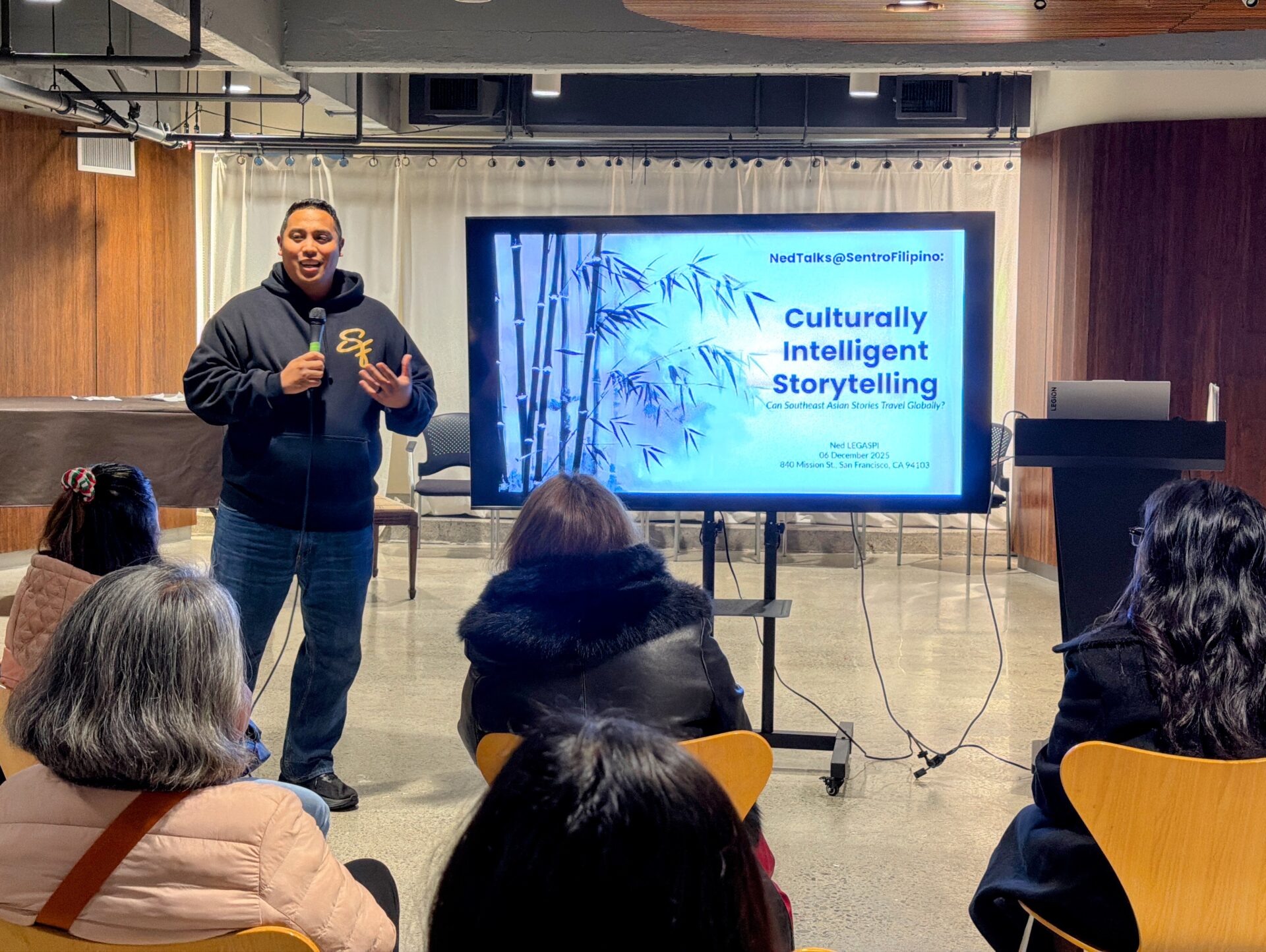
I remain grateful to Lisa Cabahug, Managing Director, and to Rio Manotoc and Alma Magsombol, all of ABS-CBN Foundation International; to Jeremiah Ysip, Rommel Conclara, and Miguel Carrion of Kapwa Kollective and Sentro Filipino in San Francisco, whose generous sponsorship of the venue made the gathering possible; to TJ; and to everyone who came, listened, asked questions, bought a book, or contributed to Sagip Kapamilya. Together, they turned the launch into something generous and shared.
Where the book found kapwa
San Francisco was the second of three launch cities. The first was in Santa Monica, where the book met an international community of Cultural Intelligence Fellows. The journey would continue in Manila, where it came home.
Each launch would have a different character. This second one gave the book kapwa: a community that did not simply receive its ideas, but recognized its own questions, memories, and creative possibilities within them.